JDoughty Posted September 2, 2025 Posted September 2, 2025 I love Partagas Mille Fleurs, they punch well above their price class in terms of tastiness and complexity. They're inexpensive enough to be an everyday smoke and they aren't commonly counterfeited. So they are (or were, before de minimis went away) my most commonly ordered box. Occasionally they have some mold on them. I've been keeping notes on aroma and flavor development and also noting the initial aromas as a checkpoint of how ready they may or may not be to smoke. In my last ditch effort at stocking up before things went completely fubar in the US, I grabbed as many boxes as I could from a few different trusted sources. Of two that arrived at the same time with the same factory and date codes (OEG Oct 24), one had mold and the other did not. Assessing initial aroma on opening the boxes, the one WITH mold smelled significantly richer and more complex, with coffee and chocolate notes already coming to the fore. Rawer, harsher back notes typically found in the aroma of relatively fresh cigars were less predominant. Curious, I went back over my notes, and who'd a thunk it - boxes that came in with visible mold assessed better to my nose and palate than the ones that did not. In all cases it was dry, powdery white mold that did not penetrate the foot, and easily brushed off. E.g., it would be what some people call 'plume' and claim is an enhancement to taste. It is obviously mold, but maybe there's something to the whole 'plume' thing? It just isn't a crystallization of oils. I do wonder if some types of mold on cigars are actually doing a job equivalent to Penicillium roqueforti in blue cheese or Aspergillus oryzae in charcuterie. What do folks think? I have certainly heard a lot of people say that cigars with the "plume" (mold!) appearance are tastier and more desirable. At least for this very small sample out of my own modest collection, I would have to agree. I'd promised a buddy a couple of the sticks out of the last few boxes I ordered, and I took them out of the non mold bearing box in part because I didn't want to introduce anything wonky to his just-beginning humidor setup, and in part because I was greedy for the goodness I smelled in the mold bearing box. Fungal organisms can be incredibly polymorphic and have very different life stages, some of them benign and some of them less so. I'll happily smoke these, but I won't give them the chance to colonize unchecked and potentially grow into something less benign. I have plenty of small quarantine desktop humidors set up as dry boxes. Can't wait to smoke these; might have to crack into them shamefully soon with how good they smell. 4
Popular Post El Presidente Posted September 2, 2025 Popular Post Posted September 2, 2025 I think we all know that is is mold (one of many varieties) but 9 times out of 10 a simple wipe off and they are good to go. I always remember a batch of H. Upmann Connoisseur number 1 that we sold on FOH with the warning that they had dustings of white mold. I had mastercases of them and every box was affected. Every box. They were some of the best tasting H. Upmann Connie 1's of all time and lapped up by members here. They didn't have rich wrappers or a rich bouquet but by god they smoked brilliantly. Similarly mastercases of the old Hoyo du Prince. Superb cigars visually and on the nose. Super rich to smoke and all dusted with white mold. Now I have also smoked moldy cigars that were dog rockets. In my experience, mold under the right conditions will hit light wrappers and dark. 5
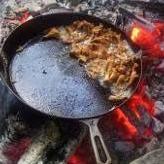
JDoughty Posted September 2, 2025 Author Posted September 2, 2025 Oh, it is 100% mold. The filamentous structures are visible even without a loupe. But it seems to be a remarkably tasty mold, rendering boxes with it significantly better in my sensory assessment to otherwise identical boxes without it. Conclusions can not be solidly drawn from the small sample size of my modest collection, but it does seem that a lot of people have claimed that their 'plume' (mold) indicates a better tasting stick. Maybe in some cases it actually does? Not because it's 'plume', but just maybe because some fungal strains do have amazing culinary transformation ability. For example, I can very quickly and deliciously dry age a steak or cure a piece of charcuterie using koji, Aspergillus oryzae, in substantially less time than with traditional methods. No firm conclusions here for lack of a substantial enough sample, but perhaps worth some thought. Here's an example of super rapid dry aging of a steak using Aspergillus oryzae in a benchtop incubator. 20%+ water weight loss in 48 hours and a remarkably similar though slightly sweeter dry aged taste when sampled against control steaks both fresh and traditionally dry aged for 21 days. It does look fairly awful in the active growth stage. 😆 I have no idea what koji would do to cigars, but it is tempting to experiment. 4
BrightonCorgi Posted September 2, 2025 Posted September 2, 2025 I have commented on here before that a bit of mold can add nuance to cigars. I wasn't intending to be controversial. Just my observation like you. 4
JDoughty Posted September 3, 2025 Author Posted September 3, 2025 What I would be very curious to pin down is whether some varieties of mold that colonize tobacco genuinely are taste enhancers, and if perhaps others may be less benign. In the culinary world, we use lots of different molds and bacteria to produce wonderful and delicious effects. They can transform food in a very positive and pleasing way. It would surprise me not at all if this also proved true for tobacco. Of course, there are also bacterial and fungal strains that straight up ruin your food, or that can even make you sick or worse. It would be very interesting to try to figure out which strains if any cause potential improvement and which strains if any are not good for cigars. This will be complicated a lot by the fact that molds can have different life stages and look and smell and taste very different depending on where they are in that life cycle. For example, freshly grown koji (Aspergillus oryzae and related strains) is a soft fuzzy white, smells like tropical fruit and flowers and tastes sweet. Spored out koji is green and immensely bitter - but very useful for growing more koji. A crucial question here would be whether there is any record of someone actually becoming ill from smoking moldy tobacco?




Recommended Posts
Create an account or sign in to comment
You need to be a member in order to leave a comment
Create an account
Sign up for a new account in our community. It's easy!
Register a new accountSign in
Already have an account? Sign in here.
Sign In Now